Friday, September 25, 2009

Shameless Sex

I applaud Keith Graber Miller’s call for a balanced sexual counterculture (Sojourners Magazine - Sept-Oct. 2009, Sex Without Shame) that exults sex-positivism in light of God’s gift of sexuality and exposes sexual irresponsibility and exploitation. It’s refreshing to see a reasoned view on masturbation, homosexuality, and youth sexuality coming from a serious Biblicist. While the church has a long way to go to shed its sex negativism, popular culture often promotes free love without responsible limits. Miller hits on two important distinctives the church and society need to hear: (1) God is more concerned that people demonstrate genuine unselfish love, respect, and care in relationships, than in what bodily interactions they pursue, and (2) good sex that is life-affirming comes after we get what we really need—a powerful intimate connection that guards against hurt, jealousy, and brokenness.

Saturday, August 01, 2009

Conference Writes the Book on Writing

I'm at the Pacific Northwest Writer's Association annual conference as I write this and it's been a wonderful experience. They have great sessions for people in every stage of writing and particularly for folks who are ready or are currently pitching their book and searching for an agent. Yesterday I pitched my book, Confessions of a Bible Thumper, to an editor and an agent and will meet more agents today. For any other aspiring writers out there, a writer's conference such as this one is the place to go to get grounded in book writing best practices. As is joining a writer's group and reading books like Anne LaMott's Bird by Bird or Stephen King's On Writing. The biggest lesson for me is that writing a book or any noteworthy piece goes way beyond writing the crappy first draft but is a long process of writing, rewriting, and having your work reviewed and critiqued by a variety of people to get your transforming ideas out there in a succinct, understandable, humorous, and highly engaging form.

Wednesday, July 08, 2009

Getting Intelligent Design Straight

I finished a draft of the chapter on Last Days Delusions, but true to form, I just have to start another chapter before cleaning the last one up. I love multi-tasking, hence the way I read 5 books at a time and write the same way. I was having a conversation with my father--a kind of ID-controversy guru--and asked him about Michael Behe (a leading ID proponent) and some of the things he said in his newest book, The Edge of Evolution. Behe is roundly attacked by staunch evolutionists, but guess what? What I suspected is true. He is officially a theistic evolutionist! Not of the Darwinian variety, of course, since that is what ID theorists critique--and in my mind, rightly so. Nevertheless, I found an interview of him on the Internet (during my conversation--I just love how quickly we can find stuff these days), and he said common design is not as good as an explanation of common descent as an evolutionary model is. He's not a Darwinist, but he still believes in evolution! What's the difference? I explain that in the chapter in my book. Point is that most of his ID colleagues disagree with him. You can be an ID theorist and still be an evolutionist (for that matter, you can be agnostic too, like David Berlinski). The media doesn't get it.

So, why don't all the other theistic evolutionists (Ken Miller, Brown U., Francis Collins, Head of Genome Project) applaud people like Behe? It appears it's not evolution per se, that is the god of science, but Darwinism. I will explore this later.

Friday, June 26, 2009

The Writing-Researching-Publishing Process

Anyone who wants to follow my experience writing, researching, promoting, and publishing my book (Working title: Confessions of a Bible Thumper - My Sojourn as an Evangelical, Why I Left the Fold, and How I Discovered a More Reasoned Faith), follow me on Twitter: http://twitter.com/Michael_W_Camp

Tuesday, June 23, 2009

Paul the Egalitarian

I knew Jesus was an egalitarian in the way he respected women in the first century's male-dominated society, but Paul? His infamous passages denigrating women made me shudder, along with every feminist on the planet. In my more moderate evangelical circles, we dealt with those passages as culturally conditioned anomalies of first century bias that were not applicable to our modern cultural context. But what if those passages were never in the original Greek text? That was something I never considered because the possibility was never allowed inside the narrow confines of the theologically-conservative churches I attended.

Well, you learn something new every day. In reading Bart Ehrman's Misquoting Jesus: The Story Behind Who Changed the Bible and Why, I learned just how reasonable the case is that the I Cor. 14:34-35 passage ("It is shameful for a woman to speak in church..." That one.) is bogus. What a breath of fresh air. But the real shocker for me is that my old friend Gordon Fee (not literally--I'm a long time fan of one of his books on how to interpret the Bible), put forth this case way back in 1987 in his commentary on I Corinthians! Where the hell was I? I didn't get the memo. Ehrman cited Fee in his book. I feel slighted. All these years Fee taught part of the Bible was altered and the evangelical church never bought it. And the Bible hasn't been revised (or footnoted as far as I know) in any modern translations to reflect it.

The case is strong. Take verses 33b to 35 out and read the passage and see how much more it makes sense. And, how suddenly Paul isn't contradicting his great line "...there is no male or female in Christ... all are one," or what he says elsewhere, or contradicting Jesus and his welcoming of women. Ehrman reveals how additions to texts were not uncommon by scribes who had theologically biased reasons to alter things. Some of them never made it into our modern Bibles but some did! Ehrman (and Garry Wills) also makes the case that Paul didn't write I Timothy. Guess where the other anti-feminist verse is attributed to Paul? You got it. I Timothy.

Sunday, June 21, 2009

Universal Life

Two books I recently read have helped shape my rethinking of the traditional evangelical view of salvation. The Inescapable Love of God by Thomas Talbot and The Evangelical Universalist by Gregory MacDonald (a psuedonym) make a near impenetrable case that universal reconciliation was the original intent of the apostle Paul and Jesus. How could the church be teaching exclusivism all these years and never have disclosed this fact? My theory is that traditionalism is so strong in evangelicalism and other conservative Christian movements that any diversion from it is suppressed. For example, how many evangelicals were ever taught that the church fathers Origen, Gregory of Nyassa, and several others were universalists? How many know that universliasts have included such prominent people as President John Adams and George MacDonald (friend of C.S. Lewis)? How many people know that the word "everlasting" in Jesus' famous Sheep and the Goats passage is more accurately translated as "pertaining to an age" and that Jesus wasn't talking about a never-ending punishment but a punishment that pertained to the coming age? How many recognize that Paul made several statements that strongly support universalism including "as in one man, Adam, all sinned, so through one man, Jesus, all will be reconciled?" No, most aren't aware of these facts because they don't fit the traditional view and teachers and Bible commentators are either ignorant of them or are deliberately overlooking them. I bring these details and much more out in one of the chapters in my book, Confessions of a Bible Thumper.

Monday, December 22, 2008

The Bible and Gay Marriage

This is the title of the collection of letters published in Newsweek in response to Lisa Miller's article in the Dec. 15 issue on her religious case for gay marriage (Our Mutual Joy). 40,000 readers responded, the vast majority arguing against Miller's case by claiming misinterpretations of the Bible. Here we go again with the scourge of black and white thinking and narrowly focused literalist reading of the Scriptures--mostly by religious conservatives, but also to a lesser degree, by Miller herself. Here's how I see various issues stand:

1 - Defining marriage - Miller is spot on. Conservatives define traditional marriage in a distorted way by conveniently overlooking the obvious acceptance in Scripture of polygamy, concubinage, and forms of open marriage. The list is long of heroes of the OT who practiced these including Abraham, the father of the Christian faith, whose wife gave him permission to sleep with her maidservant, and David, a man after God's own heart, who was rebuked for stealing another man's wife and murdering her husband, then told by God himself if he wanted more wives, God would have given him more if he had only asked. One man-one woman monogamy, as a law, was foreign to the traditional Jewish concept of marriage. Polygamy was not only allowed but encouraged by God through the Leverite law that commanded men to marry their brother's widow if the brother died without fathering children. Point Miller. Let's understand our definitions of terms per the Scriptures themselves. The Bible does not define marriage as explicitly between one man and one woman.

2 - Paul's attitude to marriage - Miller misses an important point. Paul did not regard marriage as an act of last resort, as she claims. Jewish tradition and Scripture encouraged heterosexual marriage as a given, inevitable outcome. In the NT, Paul was stating his view of marriage in light of "the eschalogical challenge," that is, the prevailing belief among the apostles that Jesus would return very soon and a time of intense hardship was at hand. In fact, it came in the late 60s to 70 AD with the terrible events and siege that led up to Jerusalem's destruction. Paul was telling unmarried men it was better not to have marriage as a distraction during such times, but if they couldn't control their desire that it was understandable that they marry. Point religious conservatives. Let's understand the context of a passage.

3 - The sin of homosexuality - Miller brings out several important points but misses several others. What exactly is Paul condemning in Romans and the other epistles? The context of Romans is idolatry. Idol worshipers end up doing things contrary to nature or more accurately, custom, and then become depraved. Is Paul condemning homosexuality across the board or only certain forms of it, such as shrine prostitution and humiliation and rape--common practices in the OT--and pederasty, a common practice among Greeks and Romans. Then there are the words in Paul's writings translated "homosexual" that are disputed by scholars who have no axe to grind. Paul's hearers no doubt did not think of our modern definition of homosexuals when they heard the original Greek words he used, and most definately did not think of lesbians. Point Paul. He was tough on idolatry and legalism and the obvious self-deluded and violent sins. He did not comment on loving same-sex relationships by those who believe in and love God.

4 - The love of Jesus - Miller alludes to it. Religious conservatives claim his love does not condone sin and making judgments about sin. But how did Jesus define sin? His most strident rebukes went to the Pharisees, the most religious zealots of the day who were notorious legalistic hair-splitters who could never find enough grace to make exceptions to the law, nor recognize the overriding principle that Christ taught--that love is the fullfilment of the law. He who loves his neighbor has met the law's demands. We are not longer under the law's supervision. Christ is the end of the law, as Paul taught. So, we no longer have to be fruitful and multiply, nor marry, if we choose not to. We no longer have to keep the ceremonial law, nor the sabbath, if we choose. Women no longer need be under a double standard, but are equal with men. But we do have to keep the law of love and let that be our guide--a guide that can override the letter of the law. Is it possible to love God and your neighbor and have a homosexual relationship? I believe it is. How can it be impossible? It may not produce children, but neither do single parents or those who choose celibacy. Point Jesus. Love trumps the letter of the law.

Saturday, September 20, 2008

Take the Insider's Tour of Evangelicalism

I'm a former Baptist missionary, aid worker, and Senior Writer for World Vision. I want to take you on an insider tour of evangelicalism, one of the fastest growing religious movements in America today. If you’re tired of Bible thumping or were ever tempted to thump a Bible thumper, this tour could be your cure. Laced with wit and humor (I hope you think so too), my journey takes you from my conversion amidst the 1970s Jesus Movement to Muslim animistic Africa with plenty of church-experience stops along the way to expose the good, bad, and the ugly of the evangelical movement.

But I don't stop there. Often disillusioned with evangelical institutions and dogma, I venture into the realm of the radical Left and their response to the Christian Right, only to find that religious conservatives don’t have a monopoly on fundamentalist mindsets. With clowns to the Christian Right and jokers to the secular Left, what is the average Joe to do who believes in God, is weary of organized religion, enjoys sex, watches the Daily Show (OK, Comedy Central also works), and can’t turn down a good microbrew? Well, before you throw in the towel and affix the new nifty atheist symbol to your bumper, you might want to check out my proposed alternate way: recover a reasonable faith that takes the New Testament call for freedom from man-made religion seriously, rejects narrow literalism, and insists on going where the evidence leads.

In my unique iconoclastic style (again, I hope so), I explore the fundamentalist roots of the church, charismatic and mainstream evangelicalism, the new progressives, including the emergent church, and over reactions to the Christian Right such as the writings of Bishop Shelby Spong and Sam Harris. By weaving personal stories and anecdotes together with some of the most controversial hot-potato issues of our day, I ponder such thought-provoking questions as these while answering them with clear reasoning and meticulous references from scholars, historians, and scientists:

• How and why do some Christians abuse the Bible?
• Why is the traditional doctrine of hell based more on tradition than on what the Bible truly affirms?
• Why is the evangelical church wrong on the gay rights issue?
• What’s all this rigmarole about the end of the world and Jesus’ return?
• Why are Christians wrong when they claim someone like Gandhi isn’t “saved?”
• Is there a reasonable way to solve the religion vs. science debate?
• Is materialistic atheism really ruling the day intellectually?
• And the real stumper, Can we ever recover from the damage done by the Teletubbies?

If you want to learn how to squash fundamentalism wherever it rears its ugly head, on the Right or the Left, and yearn for some clarity in religious thought and the culture wars, my tour in the form of a new book called Confessions of a Bible Thumper, may be your ticket to an authentic and progressive spirituality independent of dogmatic trappings. What part of this tour are you fascinated with?

Saturday, November 10, 2007

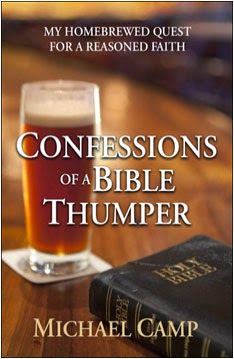
Confessions of a Bible Thumper

Why haven't I posted anything in a while someone asked? Well, I've been busy working my day job and on a new writing project (could turn into a book) that I will begin to preview here. I welcome all your comments.

How a Former Evangelical Survived the Christian Right, Rejected the Radical Left, and Recovered a Rational Faith

Introduction

The enigma of Christian fundamentalism and most of evangelicalism is the loss of the biblical concept of freedom and the development of the unbiblical system of performance-based religion. Based on their preoccupation with biblical inerrancy and literalism, most of evangelicalism has succumbed to a deep-seated and insidious legalism that grips conservative bible-believing Christians with an iron fist that refuses to let go. From the asinine superficiality of extreme fundamentalism to the more thoughtful faith of moderate evangelicals (but no less performance- and law-based) the conservative church is in spiritual bondage, suffering from a severe drought of grace—something with which it should be inundated given what the Bible truly teaches. As one conservative church member said to me recently when I asked him why he stopped attending church, “I got tired of jumping through hoops.”

Although there may be glimpses of freedom among some progressive evangelicals, legalism typically reigns supreme, taking various forms within individual churches and denominations. The censorious gradations include on one side of the extreme written and unwritten codes for dress, behavior, speech, sex, ministry, and non-essential doctrines (e.g., restrictions on skirt lengths, body piercings, alcohol use, most if not all divorce, certain sexual behaviors even among married couples, women in ministry, adherence to the King James Bible only, and fundamentalist statements of fairh). Moderates aren’t nearly as strict yet have their own written and unwritten legalistic codes that include measuring a person’s godly maturity based on how well they practice spiritual disciplines, such as praying and reading the Bible, and their degree of commitment to, and financial support of, an institutional church. In short, legalistic evangelicalism focuses primarily on what believers must do for God rather than on what God has done for them. Afraid of teaching true biblical freedom, the institutional church attempts to control people through its emphasis on creating and enforcing laws derived from misinterpretations of the Bible and traditional non-biblical teachings rather than allowing individuals to govern themselves under the overriding law that Christ taught—love for God and neighbor.

Shamefully, the church also suffers from a shortage of clear thinking. Mark Noll laid out that case in his seminal book where he stated in the first sentence, “The scandal of the evangelical mind is that there is not much of an evangelical mind.” Not exactly an encouraging sign. Although Noll recognizes certain virtues of evangelicals, such as sacrifice and generosity to the needy, he concludes they are not exemplary for their thinking.

Ironically, the enigma of the radical religious Left is their extreme emotional overreaction to the Christian Right. Garry Wills calls this “the new fundamentalism”, a term he uses to describe the work of the team of scholars who make up the Jesus Seminar. “Though some people have called the Jesus Seminarists radical, they are actually very conservative. They tame the real, radical Jesus, cutting him down to their own size.” Wills is no card-carrying fundamentalist.

Confessions of a Bible Thumper is the product of my journey of 25 years as a card-carrying evangelical who, frankly, got tired of jumping through hoops. Disillusioned with anti-intellectualism, superficial platitudes and pseudo-spiritual pat answers, both blatant and subtle legalism, litmus tests for outsiders, and the gross and widespread mishandling of the Scriptures, I left my bible-thumping ways only to find that many liberal alternatives to the Christian Right aren’t much better.

Read entire Introduction...

Saturday, November 18, 2006

Rethinking Iraq

Recently in Newsweek (November 6 cover "We're losing, but all isn't lost.", Fareed Zakaria wrote an excellent and balanced view of Irag with recommendations for a way forward. Frankly, I'm tired of simplistic pronouncements on "Bush's War", from both Bush critics and some supporters. Critics blindly overlook the stark realities of the Saddam era, saying we should leave now and never should have been there in the first place. Some supporters, and Bush himself, overlook the stark realities of the escalated Sunni/Shiite sectarian hatred and violence (and the fact that much fighting is largely not a jihadist crusade but a Sunni struggle for control of the country) and its impact on uniting a democratic Iraq. Zakaria gives a more realistic picture and suggests a more balanced solution.

Democracy in Iraq--although I believe it still has a fighting chance--is not winning. Zakaria says we must "reduce and deploy our troops and nudge Iraqis toward a deal" in order to avoid total loss and get a "gray" outcome. In laying out the bad and the ugly, he doesn't overlook the good: a free Kurdish north and democratic free elections. One point he hits home is the critical fact that "the way out of this stalemate is not to pack up and go home. That will surely result in a bloodbath or worse."

One element missing from Zakaria's analysis is the need for forgiveness in Iraqi society. Without it, there is little hope. Shiites are venting after years of Sunni control and oppression, and Sunnis are retaliating trying to regain control. Shortly after Zakaria's article (and Saddam's hanging sentence), the largely Shia-controlled government finally made an effort to reign in Shiite death squads that attack Sunnis and then offered Sunnis their old government jobs from the Saddam era--a huge concession. Steps to reconcile and forgive like this will do more than any military solution. And as Zakaria said, with a Shia and Sunni agreement, Al Qaeda would be marginalized in the country.

Monday, November 13, 2006

Ted Haggard's Darkest Hour

The case of Ted Haggard and his recent fall from grace is a truly bizarre story. Haggard initially minimizes the accusations by Mike Jones (I bought meth from him, but didn't take it; I got a massage from him, but didn't have sex with him - sound familiar? "...but I didn't inhale"), but eventually confesses his own deception: "The fact is I am guilty of sexual immorality. I am a deceiver and a liar. There is a part of my life that is so repulsive and dark that I have been warring about it for my entire life..." He still says not all of what was claimed was true, but enough of it is. Meanwhile, Mike Jones passes a lie detector test partially--the part about him having sex with Haggard he fails. Perhaps he was stressed at that time, says the test implementer, and says he will do it over. Whatever the outcome is irrelevant now that Haggard has at least admitted deception, sexual immorality, and a "dark side".

Haggard is now mocked by the left and tolerated by the church, as a fallen brother, whose sin now exposed, was part of God's will as "God is a holy God and he chose this incredibly important timing for this sin to be revealed, and I actually think it's a good thing. I believe America needs a shaking, spiritually, " so said a leading board member of Haggard's church.

God is using this to shake America? Isn't he using it to shake the church? Shouldn't people be angry that the church continues to foster deceptive leaders? Or, is there a deeper element that should be faced--the fact that narrow, legalistic teaching bears the bad fruit of deception, hypocrisy, and in some cases deep sexual frustration?

One of the bizarre elements of this is how no one seems to be asking how a anti-gay-rights evangelical influential leader could fall into homosexual sin in the first place! Doesn't it appear like he was a man struggling with homosexual orientation and finally gave in? If so, his story must be reminiscent of Mel White's, although Mel didn't openly preach against homosexuality.

In 2003, Haggard was quoted as the new President of the National Association of Evangelicals: "This is evangelicalism's finest hour. It is the time for evangelicalism to assert itself in the public debate of ideas." If that was their finest hour, today is one of their darkest. And, another piece of evidence that the church is in desperate need of a new reformation.

Sunday, November 12, 2006

Myths in the Media and in Public Thought

Did you know almost everything you know is wrong? So says 20/20 consumer advocate John Stossel in his new book Myths, Lies, and Downright Stupidity. And he has a good point with a strong case.

I have been flabbergasted how so much of what the media reports and how they frame debates is distorted and misrepresented. Headlines announce news and without reading the whole article or digging deeper into facts, you walk away with a distorted view. Or, the bias of the media outlet slants the issue the way they want. The result is many of us are duped. Stossel exposes this phenomenon with his fact-finding investigative approach. Here are some samples of his findings:

Myth: DDT is dangerous to the environment. Truth: DDT saves lives.
I've been telling this story that DDT is way overhyped as a killer. It's only dangerous at very high levels and when public policy banned it years ago, it proved devastating for Africans. If the US funded DDT spraying, we could prevent the spread of malaria, but we don't and millions die.

Myth: Gas prices are going through the roof. Truth: Gasoline is a bargain.
When adjusted for inflation, we still pay little for gas. In fact, factoring inflation, gas today is 69 cents cheaper than 1981!

Myth: Outsourcing takes American jobs. Truth: Outsourcing creates American jobs.
Outsourcing helps the poor in the developing world and lowers prices and helps us consumers. Lower prices means we have more money to spend. Outsourcing also enables businesses to expand operations and create new and better jobs for Americans.

Myth: Republicans shrink government. Truth: Republicans say they will, but don't

Myth: Government helps the needy. Truth: Government hurts the needy by vomiting the public's money everywhere.

Myth: Politicians (e.g. President and Congress) run America. Truth: The people run America.

Myth: Public schools are underfunded. Truth: They have lots of money.

Myth: Business rip us off. Truth: Most don't.

Myth: Experts can cure homosexuality. Truth: Experts delude themselves.
(My thinking on this one has changed and I agree with Stossel - see Mel White).

Myth: (a) Global warming is happening because of fossil-fuel burning and (b) signing the Kyoto Treaty would stop it. Truth: (a) Maybe and (b) Hardly.
The evidence points that it doesn't. See Canadian scientists statement. Kyoto would hurt the poor.

Myth: Polygamy is cruel to women. Truth: The women aren't complaining.

Myth: John Stossel is a conservative. Truth: John Stossel is a libertarian.

Sunday, November 05, 2006

Posts to Come

I've been so busy with my new job, I haven't had a chance to post much. I've got several subjects on my mind to post around including the Ted Haggard incident, John Stossel's new book called "Myths, Lies, and other Downright Stupidity", the Dead Sea Scrolls, the recent excellent Newsweek article on Iraq, and more about the Intelligent Design movement (just watched a video of Richard Dawkins visiting Ted Haggard's church -- a misrepresentation of the ID movement and a shameful display by Haggard, which reinforces again the need for a radical reformation in the church or else materialists and/or legalists will rule the day).

Technorati Profile

Saturday, August 19, 2006

Who's the Dodos? Intelligent Design Theorists of Evolutionists?

Randy Olson, an evolutionary biologist, made a documentary called Flock of Dodos. that makes the case that the success of Intelligent Design is merely from a slick PR campaign (by Seattle's Discovery Institute) and not based on real science. Olson says there is no crisis of evidence in evolution, but some people still don't believe in it because of a poor job of communication by scientists. The film (I've only seen the trailer and the ABC interview of Olson) attempts to discredit the ID movement by revealing who the real Dodos are--anyone who doubts in evolution.

One thing Olson did well in the interview is to differentiate between Creationists and ID proponents, something that isn't often done. Creationists start with a literal belief in the book of Genesis and try to bend science to fit it. ID theorists don't begin with Genesis but only with the scientific evidence for design in nature. Yet excerpts from the film reveal evolutionists mixing them all together--one of them says we should call out supporters of creationism or ID and tell them "you're an idiot."

Although, it appears to give both sides of the story, the film apparently leaves out much of the story. There IS dissent among scientists. 100 of them from universities signed the Scientific Dissent from Darwinism. Is this scientist in the film calling the likes of these--including agnostic David Berlinski and intellectual giant William F. Buckley, idiots? This debate is not a new PR battle that started in 2000, as the film claims. Biologist Michael Denton wrote Evolution: a Theory in Crisis in 1986. Mathmetician Berlinski, wrote The Deniable Darwin in 1996. UC Berkeley's Philip Johnson put Darwin on Trial in 1993. If one takes a truly objective look, the theory of evolution is in crisis. Even a Dodo can see that.

Billy Graham the Moderate

Newsweek just ran a story on Billy Graham in his twilight years that was encouraging and revealing. The writer put Graham in a favorable light and highlighted his approach--over the years--of not making politics primary, but secondary to the Gospel "which transcends party lines." A few of the quotes jumped out at me as they reinforced much of how I have changed or never bought the conservative Christian party line.

Graham says "I'm not a literalist about the Bible in that every jot and tittle is from the Lord. This is a difference in my thinking through the years." And, "It would be foolish for me to speculate on who will be in heaven and who won't. He gave his son for the whole world, and I think he loves everybody regardless of what label they have."

Wise words indeed.

Wednesday, May 17, 2006

Up From the Evolutionary Ooze

Hey, I got my letter from the post below (Would Darwin Really Have Loved It?) published in Time magazine! Here is the excerpt they printed under the title "Up from the Ooze":

Here we go again. One transitional animal is discovered and "presto," Darwinism is undeniable. Paleontologist Novacek says “Some people will never be convinced,” and conveniently ignores the growing non-creationist voices of variance. Fishapod could be a link or could be a strange animal like a platypus. Without a worldwide fossil record of continuous transformation, it is far from a slam dunk for Darwin’s theory in action.

Monday, April 17, 2006

Divine Sex

Traditional Christian teaching on sex does not mesh with the original writings of the Bible set in their historical and cultural context. That is one premise in this important book by Philo Thelos (Divine Sex: Liberating Sex from Religious Tradition - click on title above). The book will shock card-carrying evangelicals or fundamentalists but simply can't be ignored. Again, my conservative Christian friends will think I've gone overboard with my endorsement of this book. The few I've shared it with think anyone who accepts it is ignoring the "clear" teaching of scripture and just wants to be free from moral constraints.

The book is compelling because the author is from a conservative church background and maintains a high view of scripture. He advocates for sound Bible study methods (original language, meaning, and historical context is key to understanding) in the vein of scholars like Gordon Fee. So, what's the controversy? He challenges traditional moral understanding about adultery, sexual immorality, and marriage fidelity with a sound Biblical argument.

For instance, have you ever wondered why polygamy, concubinage, and other multiple sexual relationships are practiced by Biblical heros without a word of censure from God? Did you know that if Bethsheba, with whom David had an adulterous liaison, was single, he wouldn't have committed adultery? In the NT, the word translated "sexual immorality" or "fornication" is the Greek word "porneia", which refers to illicit and idolatrous practices as defined by the Torah and does not refer to singles sexuality, oral sex, masturbation, erotic writings, or viewing graphic depictions of the human body.

The main ethic that can be derived from the Bible regarding sexual practice is a love ethic. In your sexual life, do not harm another but love and respect your neighbor. Adultery is wrong because it takes what belongs to another (sexual theft) or breaks a commitment made to another. If in a marriage, a couple allows one another to engage in other relationships that don't steal what belongs to another, those relationships don't fit the Biblical definition of adultery. Monogamy and abstinence from sex until marriage is not demanded by the Scriptural definitions of porneia. The book Divine Sex convincingly makes this case and challenges the traditional faulty interpretations of sexual morality in the church today.

Friday, April 14, 2006

Would Darwin Really Have Loved It?

Time magazine did an article on the Fishapod discovery (April 17) and the confident it-will-be-hard-to-explain-away attitude of some Darwinism supporters shined through. Here's my letter to the editor:

Fishapod: Cousin or Exotic Critter?

Here we go again. One transitional animal is discovered and "presto," Darwinism is undeniable. Paleontologist Novacek says “Some people will never be convinced,” and conveniently ignores the growing non-creationist voices of variance. You know, “wackos” like William F. Buckley and avowed agnostic David Berlinski, not to mention the 100 reputable scientists who signed the Scientific Dissent from Darwinism statement. Sorry, Darwin expected “innumerable” and “endless” transitionals, not merely a few. Miller states “The argument that there are no transitionals is untenable.” Agreed! But the critique is not that there is none at all, but that the myriad of transitionals Darwin anticipated necessary to demonstrate macroevolution has never been found! One single discovery is unimpressive when you are expecting a plethora. Fishapod could be a link or could be a strange animal like a platypus. Without a worldwide fossil record of continuous transformation and demonstrable mechanisms of transition, it is far from a slam dunk for Darwin’s theory in action.

Sunday, March 05, 2006

Idolatrous Interpretation of the Bible

When I was in college at U. Mass Amherst, a friend of mine from Intervarsity fellowship told me about the time she visited a cult meeting (I believe it was called "The Way"). She said, "I know this sounds strange, but it was like they worshiped the Bible, not God."

Years later, that statement doesn't sound so strange to me. I've seen too many times where a Bible verse or teaching (more accurately, a certain traditional unsound interpretation of a Bible passage or theme) is worshiped above a more historically, culturally based reading of that passage. A second type of this practice is what I call selective literalism. When a reader says they take the Bible literally but in reality only accepts passages that fit their theology. They worship their theology above truth.

I believe the first main cause of this is the failure for churches to teach people good practices in studying the Bible. People who are told that it's the "Word of God" will take the English words in each verse at face value with little attention to the cultural, literary, or original-language context of those words. So a verse like "I wish above all things that you prosper", becomes 'God wants me and you to be wealthy'. "Flee sexual immorality", becomes 'Don't practice whatever I envision sexual immorality to be, e.g. masturbation, oral sex, viewing graphic sexual images, (all behaviors that the Bible doesn't address at all as a sin issue) or singles sexuality (a behavior that it addresses only as an ownership issue for a father or a bridegroom).

Selective literalism could take, for example, Jesus' discourse on the 'last days' and make it fit a present-day scenario (where every earthquake and disaster becomes "proof" that we are in the last days) but ignores Jesus' clear-cut statement "I tell you the truth, this [1st century] generation will not pass away until all these things take place". Or, refusing to address the obvious acceptance of polygamy, concubinage, and certain sexual freedoms in the OT, when interpreting sexual mores for today. Think about it. How many times has one heard a Bible message on the implications of God honoring these figures in the Hebrews hall of faith: Samson, who slept with a prostitute and took Delilah as a girlfriend, Rahab the prostitute, and David who had several wives and concubines and to whom God said he would have given more if he only asked?

Idolatrous interpretation can be annoying at best and dangerous (see my comments on Pat Robertson) at worst. Either way and even when it's sincere and well-meaning (often the case), it dishonors God to so casually call something his Word for people today when there is strong Biblical evidence to the contrary.

Make Happiness Normal

I disagree with the thesis of Time's article called "Happiness Isn't Normal," (Feb. 13, 2006), about a new form of psychotherapy that tells people to embrace pain to overcome sadness. Face emotional pain, yes, but know need to embrace it, it can be overcome with a dose of realistic perspective and unconditional love, often through the vehicle of cognitive therapy. Here's my letter to the editor:

Having been depression-free for seven plus years due in large part to cognitive therapy, I am skeptical of Hayes' ACT therapy. Its refusal to challenge distorted thoughts dismisses reality and can only lead to its conclusion that happiness isn't normal. Cognitive therapy is superior, I believe, because it helps the depressed put things in proper perspective and to overcome the tendencies of blowing negative things out of proportion and disqualifying positive things in life. The result is that the positive exceeds the negative and happiness is normal. Perhaps one reason ACT is having some success is because it does mimic cognitive therapy to some degree. When ACT teaches a response to a negative thought to be "I'm thinking I'm a lousy parent," rather than "I'm a lousy parent," it at least diffuses the power of that thought and plants a seed thought: "Since I'm only thinking it, perhaps I'm not one." Cognitive therapy does this more directly and by facing reality, not dismissing it.

Saturday, March 04, 2006

Challenging Closed Minds

World Magazine, the evangelical national news publication, did an article on Soulforce's Equality Ride (a group of young self-proclaimed evangelical homosexuals) campaign that is visiting Christian campuses to challenge their ban on gay and lesbian students (Uninvited Guests, March 4). Joel Belz first imagines a college deciding if they should allow a group of Muslims on campus who want to do a cultural exchange. That's seems fine, he concludes, it would give opportunity to build bridges, be a positive Christian witness to Muslims, without compromising the college's values. But then, what if the group was Soulforce's homosexual activists--part of Equality Ride? All of a sudden, that proposition makes Christian colleges uncomfortable. They wouldn't want them to show up, but might tolerate them for a discussion before sending them on their way.

Why are they unafraid of welcoming Muslims but afraid of welcoming homosexuals--even ones that call themselves believers? This is the closed-minded attitude that permeates many traditional Christian groups. They have already made up their mind because they already know the truth--so they say. If they are sure about the truth, they should not be intimidated. That is why they should welcome Equality Ride and encourage open dialogue. It should be interesting to see how the 20 campuses respond to these visits, including my graduate school, Eastern University. My experience is that we Christians don't always know what we are talking about when we say we know the truth about something. Misunderstandings, mistranslations, and misinterpretations of the Bible unfortunately are not uncommon. See What the Bible Says... as an example.

Monday, January 30, 2006

Rethinking Abortion

In college I was pro-choice. After reading Francis Schaefer and Everett Koop (Whatever Happened to the Human Race?) and Bernard Nathanson (Aborting America), I became pro-life and have been ever since. Why the change? New information I wasn't aware of. For example, Nathanson exposes some of the lies of the pre-Roe v Wade prochoice legal arguments and explains his transformation from being a co-founder of NARAL and a leading abortionist to recognizing the humaness of "alpha" (the fetus) and becoming a pro-life advocate. (I challenge everyone to read this book, whatever your side. Nathanson doesn't write as a right-winger but as an abortion movement insider). Koop brought his perspective as a pediatric surgeon and the value of human life. In 1989 I was arrested along with 800 others in Los Angeles at an Operation Rescue (OR) in front of a clinic and spent 3 days in jail. That was an eye-opening experience.

Although I'm still strongly prolife, my stance has shifted over the years as I continue to learn new information. I no longer believe that abortion should be in the same category as murder, except perhaps in some extreme late-term circumstances. I now have no issue with allowing exceptions for abortion for rape or incest. I no longer think that we should have a nationwide ban on abortion, but instead we should allow the States to decide through the legislative process. Although my experience with OR was positive (the media and pro-choice counter demonstrators revealed extreme bias against us), I have found later statements by an OR founder to be divisive and out-of-line.

Today, my main peeve with more traditional pro-life stance is the all-or-nothing and black-and-white attitude. It is our way or the highway and no room for compromise. My main peeve with the common pro-choice position is its disingenousness and unwillingness to face facts. If they were truly pro-choice, they would welcome the nationwide network of pregnancy help centers and encourage women to consider their services. They would admit the lies of their past (e.g. the exagerated claims on the number of deaths from backalley abortions, that "Roe" was not raped as was claimed in the case, and that she is now pro-life), and the fact that the Roe v Wade decision is based on flawed legal logic which is increasingly being conceded by pro-choice analysts. For example, see Cohen and Kinsley, (Kinsley: "Although I'm pro-choice, I was taught in law school, and still believe, that Roe v Wade is a muddle of bad reasoning... and judicial overreaching.")

It's interesting that Cohen has shifted within a pro-choice position and is now closer to mine. Perhaps this is a one way to solve the abortion dilemma. Each side get honest and take steps toward each other.

Wednesday, January 18, 2006

Extremism and Hypocrisy

The statements I heard from politicians at MLK day events were laughable. Hillary Clinton said Congress was like a southern plantation (How? Are they holding slaves?!!) and Bush was the worst-ever President. New Orleans Mayor Nagin said God was punishing America with hurricanes for the Iraq war (a left version of Robertson?) and that God wanted his city to be majority black (a chocolate city). How outrageous and irrelevant to what Martin Luther King espoused! Why all this divisive talk on MLK day? Actually Nagin's statement was racist. How do you know? Just switch the terms. Imagine the outcry if a white mayor said God wanted his city to be majority white!

Not to be outdone, Al Gore compared Bush's wiretapping of Americans to the FBI's dispicable surveillance of King. Seems Dems just used the day to make extreme political attacks. This criticism of wiretapping suspected terrorists and people talking to them boggles me. Presidents have historically used executive powers for this purpose. People conveniently forget that Democrats Clinton and Carter did. Clinton ordered physical searches without warrants here. Carter ordered electonic surveillance without court orders here. There are times when this is a good idea for national security. Court orders can take too long to get when suspected terrorists are plotting and time is cruical.

Of course these liberals don't have a monopoly on crazy statements or hypocrisy. Pat Robertson made another wild statement a few weeks ago about Ariel Sharon (He said "it may be that Sharon's being punished for giving up Gaza") and that the book of Joel shows that to give land to the Palestians is sin. This last one is a great example of Bible abuse. The book of Joel is not speaking to the middle east situation thousands of years in the future! To twist scripture to accuse Sharon is outrageous. And of course for more hypocrisy, there's conservative Christian leader Ralph Reed who didn't see any conflict of interest asking evangelicals for money to block tribal casinos in the south when he knew another tribal casino was paying his firm for the work (via Jack Abramoff). This casino hired Abramoff and Reed to gain a monopoly. Reed didn't bother telling evangelicals that they were actually encouraging gambling, not where they lived, but just down the road or across the state border!

Wednesday, January 04, 2006

The Bible and Homosexuality

If my evangelical friends thought I had gone overboard with my call to A New Reformation, they will think I’ve gone off the deep end with this assessment of homosexuality and the Bible!

I have to admit, for years I have wondered how anyone could defend homosexuality in light of certain passages of the Bible. But that was before I did an honest study of those passages and discovered misinterpretations, AND before I learned that several words in those passages are almost certainly mistranslated! I believe these misinterpretations and mistranslations are grave injustices that need to be rectified.

A few observations that are undeniable: Female homosexuality was never condemned in the Old Testament, hence it was not against God’s law. Female homosexuality is only mentioned once in the New Testament in a seven-word phrase, in the context of idolatry. (Romans 1). There is no Hebrew or Greek word in the Bible that is equivalent to our modern term “homosexual.” The word homosexual first appeared in English Bibles in the 1946 RSV version. The word “sodomite”, referring to a male homosexual, is not in the original Hebrew or Greek. The two words most often translated “homosexual” are the Greek words “malakos” and “arsenokoitai,” obscure Greek terms whose translations are disputed by scholars.

The fact that female homosexuality is not condemned in the OT is amazing. If God was against all forms of homosexuality, why did He mention only male homosexuality in the Holiness code of Leviticus? The code also includes specific laws against incest (spelled out with attention to every conceivable sexual liaison), adultery, rape, and bestiality, but no law against female homosexuality. Its absence is a mystery, unless only certain forms of homosexuality are condemned. In addition, the NT teaches that “new covenant” believers have been released from the OT law. We are not obligated to obey the law, unless it becomes necessary in order to keep Christ’s law of love.

Context—literary, cultural, historical—is King when it comes to proper interpretation of the Bible. The passage in Romans condemning homosexuality is in the context of idolatry. The people doing these shameful acts are not worshiping the one true God, but idols. Are the acts shameful because they are homosexual or because they are part of idol worship? Shrine prostitution, with both male and females, was not uncommon in the Roman empire and among pagans throughout Israel’s history.

The term malakos is translated “effeminate”, “male prostitutes”, or “homosexuals”, depending on the version and literally means “soft” as an adjective. “Arsenokoitai” literally means “male bed”, and is translated “abusers of themselves with mankind” (KJV), “homosexual offenders”, or “sodomites.” Put in their historical context, malakos probably means “catamite” (New Jerusalem Bible), which is the young teen or boy in the common-for-the-day Greek/Roman pederastic relationship, with “arsenokoitai” probably referring to the men who used them sexually.

The church’s traditional view of homosexuality has not adequately explained these facts and perpetuates misunderstanding by not drawing attention to historical and cultural circumstances and the problems with the term “homosexual” as an English equivalent to the original Greek words. For a more detailed study, check the link on the title of this post.

Good Rich Samaritans

I was pleasantly surprised to see Bill and Melinda Gates and Bono as Time's Persons of the Year for 2005. I had mentioned them in previous posts on Black-and-White Thinking and Caring for the Poor and Fighting Poverty. It's great to see some good press on big business (so often stereotyped and demonized) and a serious entertainer activist. The Gates are doing amazing things in healthcare research and Bono has influenced politiicians to provide debt relief for developing nations and more money for AIDS programs. There's even a nice article about the odd couple, 41 Bush and Bill Clinton working together to raise relief funds.

Tuesday, December 20, 2005

Refining a Reformation: A Response to Spong

As I write on the need for a new reformation (see Nov. 3) for Christianity, many people have told me my ideas are similar to John Shelby Spong's, who wrote Rescuing the Bible from Fundamentalism (a notion that I wholeheartedly agree with). Having never read him directly, I needed to, so delved into his latest book, The Sins of Scripture. What I discovered shocked me. Although I can agree with Spong on the need to rethink so much of what has become traditional Christianity (and agree with several of his conclusions), I believe he has succumbed to an emotional overeaction that reinforces to me the need for a more objective fact-based reform.

Spong believes much of the Bible is a fraud, stating, for example, that the idea of Jesus's suffering as atonement due to inborn sin is a human creation concocted by the early disciples to explain the crucifixion. He believes sadomasochism is in the heart of Christianity because God is portrayed as an angry Father who punishes people, and eventually His son, for the sin of humankind. But he doesn't offer objective evidence for this fraud, only a host of emotionally based arguments, some of them misusing Scripture the same way that fundamentalists do. He also ignores other evidences such as the NT manuscript evidence for historicity, Isaiah's predictions of a suffering servant who bares sin for the people, and the testimony of history of human evil that cries for justice--atrocities such as the Killing Fields, Rwanda massacres, the Holocaust, Stalin's purge, and the Armenian holocaust, to name only a few in our century.

Where Spong sees problems in Scripture, he often jumps to conclusions without attempting to understand the historical, cultural, and literary context, before making an intepretation--the very sin that proof-texting conservative Christians practice. For example, he says Matthew 27:25 (A Jewish crowd insists on Jesus' crucifixion in response to Pilate's plea of innocence, "His blood be on us and on our children.") is responsible for anti-semitism and untold Jewish suffering and therefore a "sin of scripture." The question is did that event really happen? If misguided people misuse and abuse the recording of that event to justify anti-semitism, how does that make the writings sinful? A careful study of related texts shows that the NT is not anti-semitic (all its authors and the whole early church was Jewish, Paul told non-Jewish believers to not be arrogant or boastful to Jewish non-believers), but that a segment of Jewish people simply rejected Jesus (as did many non-Jews as well).

A careful study also indicates that God is not laying a guilt-trip on people (as many churches do as a result of misinterpretation) just because He sent a sacrifice for sins. The overall message is grace, not guilt, another NT theme that Spong ignores.

Spong fixates more on Scripture being fraudulent or guilty of false teaching. I agree that there are real problems with some biblical passages, but the solution is not to reject its teachings outright, but pursue correct translation, interpretation, and application in today's world. The problem is not so much Scripture, but people and institutions twisting and abusing it to justify evil or falsehoods. Without a new reformation, fundamentalism and much of evangelicalism on the right, will continue to abuse Scripture, and people like Spong, on the left, will continue to overeact to such abuses.

I respect Spong for making a bold call for change and will continue to read his position. However, I believe the change must be in line with historical truth found through sound exegesis, hermeanutics, and an honest study of canonicity and the nature/limits of biblical authority and inerrancy.

Tuesday, November 15, 2005

Intelligent Design Theory Revealed

With the Dover, PA case, Intelligent Design (ID) theory is in the news. A local school board tried to legislate (the operative word is "legislate") that science teachers read a disclaimer to students that evolution is not universally accepted and that ID theory offers an alternative scientific perspective. Eventually the school board was voted out. But what is the real issue at hand here? On the one hand, knee-jerk reactions from staunch evolutionists were that this was a back-door attempt to introduce religion and "creationism" into the classroom. On the other hand, the appalling response from conservative Christian Pat Robertson was that Dover, Pennsylvanians should not bother calling on God should a future disaster come their way since they denied Him with their vote! Really now, why do extremist views get all the press?

First of all, ID theory is not a new brand of creation science. Anyone who understands the debate knows this. Creation science is based on a literal interpretation of the book of Genesis and tries to support a young earth, a worldwide flood, and a literal six-day creation timeframe among other things. ID theorists don't support these assertions at all. Authentic ID theorists and the related and growing critics of evolution are not presupposing a literal reading of the Bible, but rather are simply pointing out the real problems with neo-Darwinism and specifically the mechanism that drives evolutionary theory--random mutations and natural selection. Yea, but aren't they closet fundamentalists pushing their agenda through a new means? Hardly. A case in point is David Berlinski, avowed agnostic, and one of Darwinism's harshest critics, who debates along side ID theorists against macro-evolution (check link in title).

Second, the Dover school board probably did include Christians who wanted to use ID theory to fight evolution. Their mistake, I believe, was trying to legislate rather than encourage science teachers who choose, to bring the scientific literature that critiques Darwinism into the classroom. There is real discrimination to those who attempt this (one teacher in Bellingham, WA did this a few years ago and got the boot).

Finally, who does Pat Robertson think he is? Those who voted against the school board aren't necessarily against ID theory, but perhaps against legislating its promotion. Others probably are not well informed about it with all the hype and half-truths out there. And even if they are well informed, what happened to the grace of God?

Monday, November 07, 2005

Caring for the Poor and Fighting Poverty

I'm ashamed I haven't given to the Pakistani earthquake relief effort yet. I could use the excuse that I was recently layed off from my job, but that doesn't cut it. They estimate 2.5 million people are homeless out in the open cold weather as winter approaches. The least I could do is give a few bucks out of my savings or forego a few meals and donate the saved cost. Caring for the poor often takes sacrifice.

Relief efforts are usually what people focus on when they think of helping the poor. More importantly is the long-term work of development that helps people overcome poverty and could make an earthquake such as Pakistan less devestating. This ongoing fighting poverty can be in the form of a variety of self-help programs such as the provison of microenterprise loans that enable the enterprising poor to run succesful businesses or agricultural inputs to improve food production.

Pedro Alonso, a Spaniard working in Mozambique, is a malaria fighter (Time, 11/7, page 88). He is working on a malaria vaccine for children with the help of the Malaria Vaccine Initiative, which was started by the Gates Foundation (Malaria is a bigger killer than AIDS in Africa and efforts to fight it are often overlooked). Yours and mine two cents or occaissional $100 bucks to fight poverty all helps the cause but don't ignore the great contributions of affluent philanthropists such as Bill and Melinda Gates. People fault the rich for being rich but when they let their hearts guide them rather than greed they can do enormous good. While working at World Vision as a grant writer I saw both indivdual philanthropists and corporations give millions of dollars. Capitalism mixed with compassion cares for the poor and fights to overcome poverty.

Thursday, November 03, 2005

A New Reformation

Christianity needs another reformation. It’s been almost 500 years since Luther tacked his 95 theses to the door of the Wittenburg cathedral that drew attention to the corrupt and misguided practices of the Catholic church. The Protestant movement produced great reforms including freely-translated scriptures, the end of the practice of indulgences, marriage for Christian leaders, and many others. Although Catholicism has had some positive changes in recent years it still needs radical change (e.g. optional marriage for priests and nuns) since it never had its own reformation. Evangelical and fundamentalist Christianity are steeped in beliefs and practices that I believe are in dire need of reform. What reforms are necessary? Here are six important ones:

1. Honorable Interpretation of Scriptures – Very few Pastors and Leaders teach people how to study the Bible honorably. Verses are commonly taken out of context, sound historical and cultural considerations are rarely taught, original language is usually ignored, and there is widespread confusion about what literalism really means. Conservatives practice what I call “selective literalism”, in which someone selects a verse that supports their view and says, “The Bible says…” while ignoring the full context of the passage, linguistic, historical, and cultural facts, translation alternatives, and other verses in the Bible that bring clarity. Also, albeit a small percentage, there are a number of key mistranslations of words or passages in the majority of English Bibles.

2. Limits to the Authority of the Bible – Far too often, the OT is casually quoted as if it has equal authority with Christ and His new convenant. Inerrancy defenders have never adequately explained the obvious discrepancies in many Biblical passages (claiming the original documents were inerrant just reinforces that we don't have an inerrant Bible in our hands). Advice from Paul to the early church, 2000 years removed from our modern context, is blindly accepted as law for believers today.

3. Freedom in Christian Behavior – So much Christian teaching ignores the established fact that believers in Christ are “released from the Law” (Romans chapters one thru 10) and in fact, released from a Law-based approach to God. Nevertheless, performance-oriented Christianity is rampant. Believers are told a host of commands that are either derived from the OT law that they aren’t under (e.g. tithe 10 percent to the church and attend church weekly), concocted from a law-based reading of the NT (e.g. establish a daily prayer time and regular “witness”, don’t allow women in leadership), or created from traditional non-biblical teaching (e.g. do not drink, dance, go to certain movies, engage in singles sexuality, etc.)

4. Ensuring Love is Fulfillment of the Law – Rather than making Christ’s and Paul’s command to make love for God and love for neighbor the guiding principle for Christian behavior, churches have made adherance to a set of both written and unwritten laws and a traditional non-biblical definition of holiness the standard.

5. Refutation of Dangerous and/or Misguided Teaching – The church has done well refuting cults but failed in its refutation and denouncement of cultic-like (at worst) and misinformed (at best) teaching such as the seven-year tribulation belief (Left Behind), non-scientific origins teaching (Creationism), condemnation of homosexuals, and extreme anti-abortion teaching.

6. Reform of Sexual Mores – The church adheres to a sexual standard based on tradition more than the Biblical record. Behaviors such as masturbation, singles sexuality, nudity, and certain sexual practices are condemned by inference not direct Biblical admonitions (e.g. the word translated ‘fornication’ or ‘sexual immorality’ is from the Greek word ‘porneia’ which historically didn’t include all sex before marriage or masturbation). Church moralists ignore the obvious Biblical acceptance of polygamy, concubinage, sex with servants, certain forms of prostitution, the erotic literature of Solomon, the property-related context of the Jewish view of adultery, and the practice of heterosexual and homosexual shrine prostitution (false worship to false gods) when interpreting right sexual mores for today.

Sunday, October 30, 2005

How I Overcame Depression

Nine years ago I was diagnosed by a psychologist with post traumatic stress disorder stemming from serious personal conflicts while working in Africa for five years. Later, another psychologist said I had "aggravated depression." For three and a half years I endured the intense, debilitating mental anguish that is depression. It was worse than any physical suffering I had, including malaria, hepatitis, and appendicitis.

Thank my Creator that He showed me a way out of the suffering and I have been depression-free for over six years. Although it was recommended by my first counselor, I took no drugs or medication. I'm here to say there is a way out from this common condition without being dependent on drugs. Our society is drug-crazy with doctors and psychologists prescribing a drug at the drop of a hat. I've met so many people who are on anti-depressants but are not dealing with the root issues of their depression. Drugs can be a good temporary solution to help people cope with the mental pain. (I probably should have taken something at the most intense time of my condition to minimize the anxiety and intense stress). But I believe they should be a short-term solution (with some exceptions to conditions that are truly caused by chemical imbalance) to get one over a hump while they tackle the root causes.

How did I finally overcome the funk? It's a long story but the short answer is through cognitive therapy. My second psychologist was brilliant in helping me uncover some childhood issues that had made me susceptble to depression all along. He gave me tools to combat negative thinking. I also did my own study and discovered a key book that helps one overcome distorted thinking (click on title for link). We feel what we think and if we are barraged by negative, self-criticizing thoughts (sometimes not even noticed), then we will inevitbly become depressed. The way out is knowing the lies we think and combating them with rational responses and the truth. In my opinion, the this needs to include the truth about our Creator's unconditional love and acceptance.